
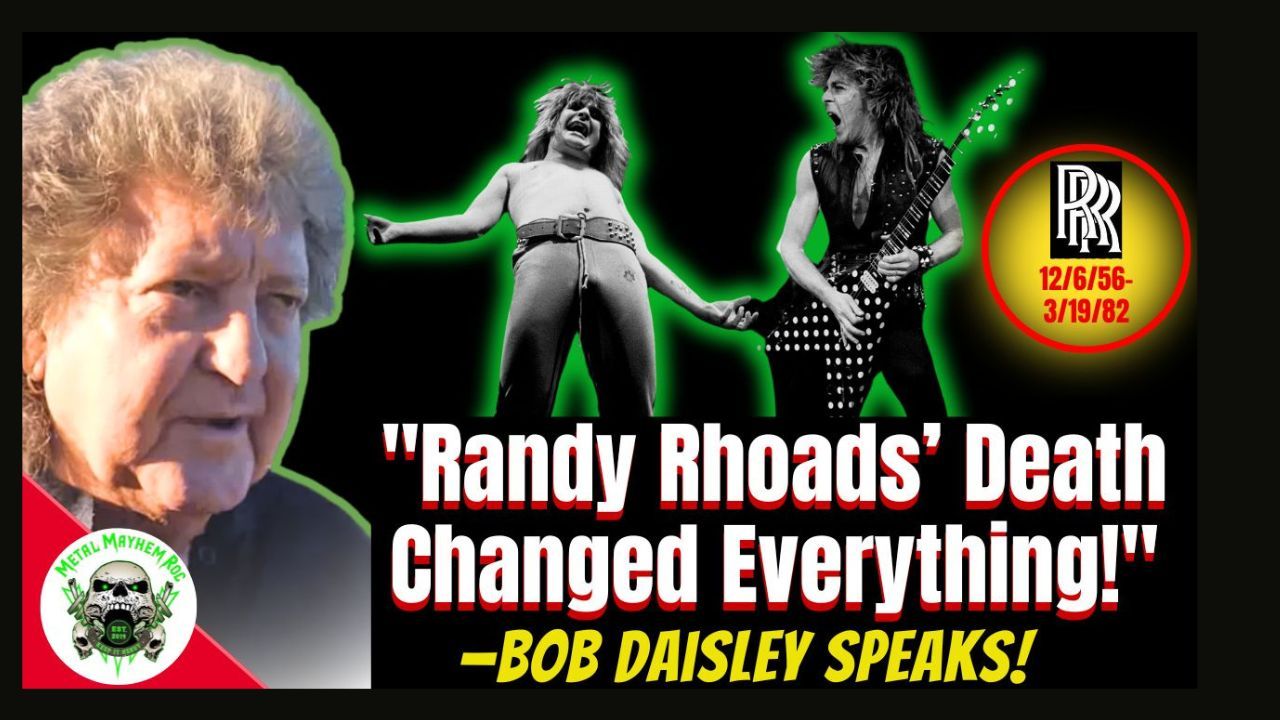
Randy Rhoads Death: Bob Daisley on the Moment That Changed Everything
There are moments in rock history where everything shifts — where a band, a sound, and a direction all come together at once.
For Ozzy Osbourne, that moment was Randy Rhoads.
And for bassist and songwriter Bob Daisley, it was something he recognized almost immediately.
From the first time they played together, there was no adjustment period. No feeling things out. Just an instant musical connection between two players who understood exactly what the other was doing.
It wasn’t forced. It wasn’t manufactured.
It was real.
Editor’s note: This conversation with Bob Daisley originally aired during a previous anniversary of Randy Rhoads’ passing. Given the significance of this moment in rock history, we’re revisiting it today.
The Chemistry That Built Blizzard of Ozz
The early Ozzy Osbourne band wasn’t a finished product when Bob Daisley stepped in — it was still being built.
Piece by piece.
What developed was a songwriting process that was simple on the surface, but incredibly effective:
- Randy Rhoads brought the riffs, tone, and musical direction
- Bob Daisley worked alongside him to shape structure, arrangements, and flow
- Ozzy Osbourne created vocal melodies
- Daisley wrote the lyrics to match Ozzy’s phrasing
That combination became the backbone of Blizzard of Ozz — an album that didn’t just relaunch Ozzy’s career, but helped define an entire era of heavy music.
Songs like “Crazy Train” didn’t happen by accident.
They were built — collaboratively — by a unit that understood how to balance precision, feel, and melody.
More Than Just a Guitar Hero
Randy Rhoads is often remembered for his technical ability — and rightfully so.
But what stood out to Daisley wasn’t just how well he played.
It was how he thought.
Rhoads approached music with intention. Every note had purpose. Every part served the song.
He wasn’t trying to overpower the music — he was trying to elevate it.
That’s what made the partnership work.
Daisley and Rhoads quickly developed a shared musical language. Ideas moved naturally between them. Structures took shape without friction.
And with Ozzy adding vocal melodies on top, the songs took on a life that still resonates decades later.
The Moment Everything Changed
When Randy Rhoads died in 1982, it didn’t just end a chapter.
It changed everything.
Daisley recalls hearing the news while on tour — a moment that brought everything to a standstill.
There was no preparation for it. No gradual realization.
Just shock.
The kind of moment that stays with you.
From that point forward, the band carried on — but the chemistry that defined those early sessions was gone.
Not replaced.
Gone.
Trying to Move Forward
Daisley would later return to work with Ozzy during the Bark at the Moon era, alongside guitarist Jake E. Lee.
And while Lee brought his own identity and strength to the band, the reality was clear:
Randy Rhoads wasn’t just a guitarist.
He was part of the songwriting engine.
Replacing that role wasn’t just difficult — it was fundamentally different.
Still, the work continued. Albums were made. Songs were written.
But the dynamic had shifted.
The Work Behind the Sound
One of the most revealing parts of Daisley’s perspective is just how much of the music was built behind the scenes.
Beyond bass playing, his role included:
- Co-writing foundational songs
- Structuring arrangements with Rhoads
- Writing lyrics across multiple albums
- Helping guide recording decisions in the studio
Yet despite that level of contribution, much of it wasn’t properly credited or compensated.
According to Daisley, performance royalties from those early Ozzy albums were never paid — despite their massive commercial success.
It’s a side of the story that contrasts sharply with how iconic those records have become.
A Career That Extended Beyond One Era
While the Ozzy and Randy Rhoads period remains a defining moment, Daisley’s career stretches far beyond it.
His time in Rainbow under Ritchie Blackmore offered a completely different environment — one built around hierarchy, precision, and pressure.
Later, working with Gary Moore provided something closer to balance — a partnership grounded in mutual respect and musical standards.
And in projects like Black Sabbath’s The Eternal Idol, Daisley once again stepped into a developing situation, helping complete and shape the final product.
It’s a pattern that follows him throughout his career.
He wasn’t just playing on records.
He was helping finish them.
Why Randy Rhoads Still Matters
At the center of this story is a simple truth:
Randy Rhoads didn’t just change Ozzy Osbourne’s career.
He changed the sound.
Through Bob Daisley’s firsthand perspective, you get a rare look at how that transformation actually happened — not as legend, but as a real creative process between musicians who were locked in at the right moment.
Because when that kind of chemistry happens, it doesn’t fade.
It stays.
Whatch the full Bob Daisley interview here:
GET SPECIAL MMROC SHOW UPDATES!
Become a part of a community of fellow metal heads who get updated on special episodes, interviews and and exclusive metal news.
We hate SPAM. We will never sell your information, for any reason.


