
From Concept to Reality: Why Queensrÿche’s 1988 Operation: Mindcrime Feels Uncomfortably Relevant in the World of 2026
May 07, 2026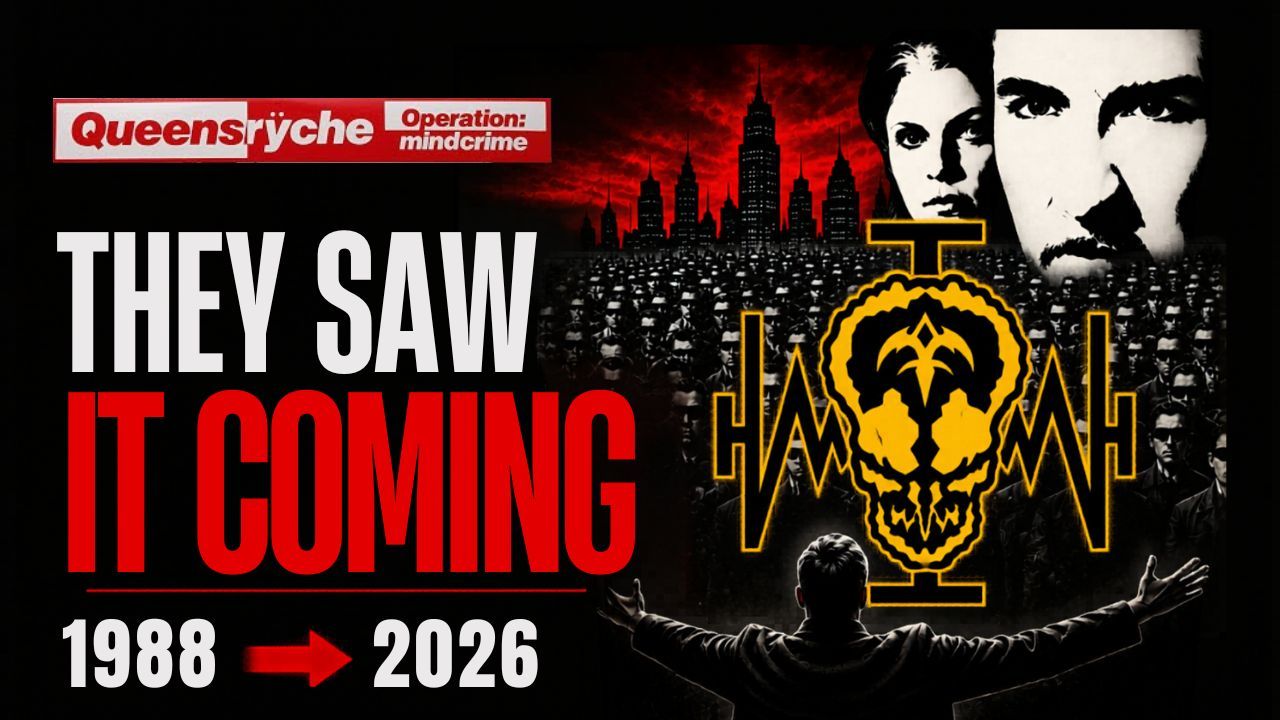
From Concept to Reality: Why Queensrÿche’s 1988 Operation: Mindcrime Feels Uncomfortably Relevant in the World of 2026
When Queensrÿche released Operation: Mindcrime in the late ’80s, it felt like lightning in a bottle—a razor-sharp rock opera that blended heavy metal with social commentary, political distrust, religious corruption, addiction, manipulation, and the weaponization of power. Geoff Tate’s dystopian narrative of Nikki, Dr. X, and Sister Mary was fictional, but it mirrored a world teetering on the edge of its own contradictions.
Almost four decades later, the question practically asks itself:
Does Operation: Mindcrime still resonate in 2026?
And the short answer is: perhaps more now than ever.
A Mirror Held to Power—Then and Now
In 1988, the album’s themes of political extremism and ideological indoctrination felt edgy, almost exaggerated. Today, they read like a case study in modern geopolitics.
From escalating tensions in the Middle East, power struggles between Iran and the West, and the long tail of conflicts in Iraq… to polarized elections, populist movements, and the return of politically charged figures like Donald Trump—global politics feel every bit as volatile as the world Nikki was recruited into.
The album warned of how easily disenfranchised people can be manipulated by charismatic leaders promising change. In 2026, that theme is not just relevant—it’s unavoidable.
Religion, Morality, and the Gray Areas Between
Mindcrime dives headfirst into religious influence and moral hypocrisy. Sister Mary’s struggle between faith, guilt, and exploitation was a metaphor for how institutions meant to serve can mutate into tools of control.
Fast-forward to today, and debates around religion’s role in politics, shifting definitions of morality, and culture-war flashpoints—from “woke” vs. traditionalist viewpoints to arguments over free speech—still dominate the global conversation. The tension between ideological purity and human reality remains as alive as ever.
Addiction and Social Decay
Nikki’s descent into addiction and desperation was central to the album’s emotional core. In 2026, we’re facing modern versions of the same crisis—opioid epidemics, increases in mental health struggles, and cities wrestling with homelessness, crime, and social fragmentation.
The setting may have changed, but the story hasn’t.
Media Manipulation and the Age of Algorithmic Influence
If Operation: Mindcrime were written today, Dr. X would run a digital empire.
Back then, propaganda was spread through TV screens and printed leaflets. Now it’s social feeds, bot networks, micro-targeted narratives, and a never-ending stream of noise engineered to keep us outraged, divided, and addicted.
The album’s message about the fragility of truth feels almost prophetic.
The New Culture War: Ideas as Ammunition
The late 2020s are defined by ideological tribes—extremes on both ends, “race war” rhetoric, cultural flashpoints in major cities, and political shifts like New York’s progressive wave.
Operation: Mindcrime asked:
What happens when society fractures and every side believe it’s fighting for justice?
We’re living the answer in real time.
Why the Album Still Matters
Operation: Mindcrime endures because it wasn’t just a story. It was a warning.
A warning about power.
A warning about manipulation.
A warning about what happens when people feel lost, angry, and unheard.
The characters—Nikki, Mary, Dr. X—were symbols of deeper forces that haven’t gone anywhere. If anything, they’ve evolved into more sophisticated, more pervasive versions.
A Case Study for 2026
Looking at the world today through the lens of Operation: Mindcrime is a reminder of how fragile societies can be—and how quickly the lines between truth, ideology, and manipulation can blur.
The album still holds up in 2026 not just because its themes remain relevant, but because they’re timeless.
Queensrÿche captured something cyclical and deeply human:
The struggle for identity.
The seduction of power.
The search for meaning in a chaotic world.
In 1988, it was a concept album.
In 2026, it reads like a study of our collective reality.
Operation: Mindcrime — Track-by-Track: THEN vs. NOW
- “I Remember Now”
Then:
A groggy awakening inside a hospital room—disoriented, controlled, monitored. A metaphor for a society waking up to manipulation.
Now:
Waking up in 2026 often means emerging to a feed of curated information, propaganda, algorithms, and outrage. The sense of confusion, mistrust, and “information hangover” parallels Nikki’s foggy awakening. Many people feel like they’re just now realizing who’s been influencing them and why.
- “Anarchy-X”
Then:
A rallying cry for political upheaval and extremist revolution. Dr. X promises change through chaos.
Now:
Political extremes dominate global narratives. From populist uprisings to far-left and far-right identity battles, anarchy is now digital—online mobs, deep polarization, and fractured societies. Revolutions unfold on platforms, not streets.
- “Revolution Calling.”
Then:
Disillusionment with corrupt governments, fake promises, media bias, and the erosion of truth.
Now:
Swap TV propaganda for TikTok and algorithmic manipulation, and the problem magnifies. Disinformation campaigns, foreign influence operations, and widespread political fatigue echo the song’s central message: we’re primed for a revolution because trust is broken everywhere.
- “Operation: Mindcrime”
Then:
The recruitment of lost, angry individuals into extremist organizations through promises of meaning and purpose.
Now:
Radicalization is faster and more invisible. Online recruitment (political, religious, ideological) thrives. Whether it’s extremism, conspiracy cults, or online hate groups, Dr. X has been replaced by influencers, bots, and algorithm-powered manipulation machines.
- “Speak”
Then:
The seductive power of a charismatic leader convinces followers to abandon independent thought.
Now:
Echo chambers do the speaking for us. Social media continues to create micro-universes where people believe what their tribe believes. The song’s message—blind allegiance—can be mapped onto 2026 politics, culture wars, and even celebrity-driven movements.
- “Spreading the Disease.”
Then:
A gritty look at corruption, religious exploitation, and the manipulation of moral authority. Sister Mary becomes a symbol of innocence used as currency.
Now:
Scandals in religious institutions, megachurch politics, and the intersection of faith and power are constant global headlines. The “disease” has evolved into billion-dollar faith industries, online cults, and political religiosity. Exploitation still thrives—just in new packaging.
- “The Mission”
Then:
Nikki begins questioning the ideology he’s been indoctrinated with—loyalty vs. morality.
Now:
A generation raised on hyper-polarized politics is starting to question the narratives they inherited. People today feel ideological burnout. Whether disillusioned progressives, exhausted conservatives, or centrists caught in the crossfire, 2026 mirrors Nikki’s crisis of belief.
- “Suite Sister Mary”
Then:
The emotional core of the album—love, guilt, religion, exploitation, and the moral tragedy of Mary’s life and death.
Now:
Mary’s story reflects modern conversations around trauma, mental health, abuse of authority, and the vulnerabilities of those caught in systems designed to fail them. The song’s emotional themes—agency vs. control, love vs. duty, faith vs. survival—are timeless.
- “The Needle Lies”
Then:
Addiction as a weapon of control. Nikki realizes his dependency is engineered to keep him compliant.
Now:
The opioid crisis, fentanyl epidemic, and corporate-driven addiction models (from pharmaceuticals to digital dopamine loops) parallel this perfectly. In 2026, “the needle” isn’t just drugs—it’s screens, social media, and instant-gratification culture keeping society hooked.
- “Electric Requiem”
Then:
Mary’s death and the collapse of Nikki’s world. A tragic turning point.
Now:
Symbolically, societies worldwide are experiencing their own “requiems”—institutions collapsing, trust eroding, communities fracturing. The death of Mary becomes a metaphor for the death of innocence and the price of radicalization.
- “Breaking the Silence”
Then:
Nikki tries to confront what’s happening and find his voice amid guilt, grief, and manipulation.
Now:
Movements today—from whistleblowers, to activists, to online truth-tellers—mirror this. People are speaking out against corruption, abuses of power, and ideological manipulation more than ever… but often at high personal cost.
- “I Don’t Believe in Love”
Then:
Emotional numbness, trauma, and loss lead Nikki to reject connection and vulnerability.
Now:
Modern life is defined by detachment—digital relationships, declining intimacy, mistrust, and emotional burnout. The song resonates with a 2026 world where many feel isolated despite being constantly connected.
- “Waiting for 22”
Then:
A brief instrumental symbolizing a pause before the final unraveling.
Now:
A metaphor for the collective waiting game society feels—waiting for elections, economic stability, global conflicts to cool, cultural tensions to ease. A breath before the next storm.
- “My Empty Room”
Then:
Nikki, alone with regret, confusion, and loss, spiraled into introspection.
Now:
Mental health struggles define much of today’s world. Anxiety, depression, and isolation are at record highs. The “empty room” is symbolic of the loneliness many feel in a hyperconnected age.
- “Eyes of a Stranger.”
Then:
Final reflection: Nikki doesn’t recognize who he has become after being shaped by corrupt forces.
Now:
Collectively, society is asking the same question:
Who have we become after years of division, outrage, politicization, and manipulation?
Identity—personal and cultural—is at the center of nearly every conflict in 2026, making this closing track feel almost clairvoyant.
Conclusion: The Story Still Echoes
Operation: Mindcrime isn’t just relevant in 2026—it may be more accurate now than when it was released.
Every song reflects something alive in today’s world:
- polarization
- propaganda
- addiction
- disillusionment
- institutional corruption
- social breakdown
- emotional isolation
Queensrÿche didn’t predict the future—they simply understood the cycles of human behavior. And those cycles continue.
GET SPECIAL MMROC SHOW UPDATES!
Become a part of a community of fellow metal heads who get updated on special episodes, interviews and and exclusive metal news.
We hate SPAM. We will never sell your information, for any reason.


