
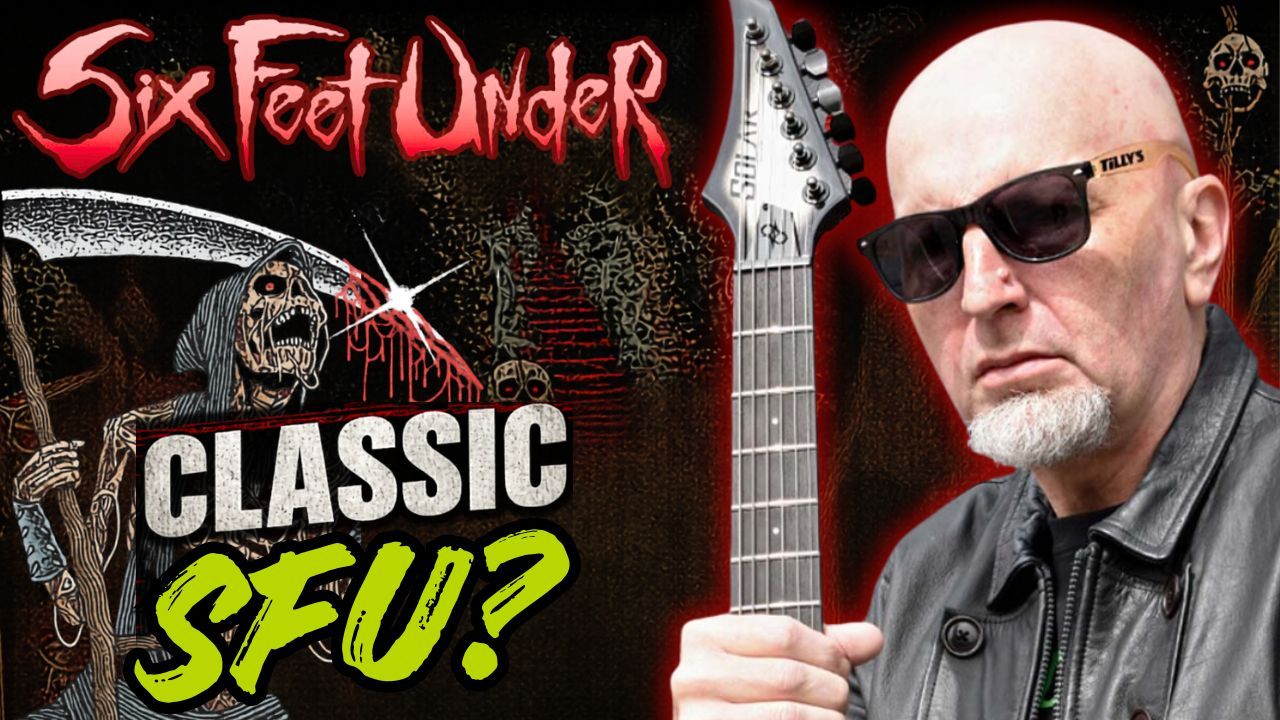
When Jack Owen stepped into Six Feet Under, the expectation wasn’t reinvention, it was reinforcement. With Next To Die, the band’s 15th studio album, that reinforcement sharpens into something more deliberate, a return to the groove-driven identity that defined its early years, without abandoning the weight of what came after.
In this Metal Mayhem ROC conversation, Owen doesn’t position the album as a nostalgic reset. Instead, he frames it as a course correction, a focused effort to refine what works, discard what doesn’t, and lean into the band’s core DNA with clarity and intent.
The Catalyst
The direction of Next To Die took shape through repetition and trust. Since joining the band, Owen’s role has steadily expanded, from writing the full musical framework of Nightmares of the Decomposed to taking on a significant share of lyrical work on the follow-up. By the time this album came together, the process was streamlined, he was tasked with writing the bulk of the material from the ground up.
What changed was the outcome. After assembling a full set of songs rooted in straight death metal, Owen and the band recognized that much of it either overlapped with past material or didn’t meet the standard. Instead of forcing it forward, they cut it back. Roughly half the material was scrapped, not because it wasn’t usable, but because it didn’t feel necessary.
That decision became the pivot point. Rather than replacing those songs with more of the same, the band shifted direction, leaning into a groove-first approach that echoes the earliest Six Feet Under records.
The Creative Process
Owen’s approach on Next To Die is defined by efficiency and restraint. He built the foundation, music, structure, and much of the lyrical content, before handing it off to the rest of the band with a clear sense of purpose. The emphasis wasn’t on layering complexity, but on creating space for each element to land.
That philosophy extends directly to his guitar work. Owen has largely stepped away from playing leads, focusing instead on rhythm construction and arrangement. It’s a practical shift, but also a creative one, allowing him to concentrate on the feel of a song rather than filling every available space.
Lead work is left intentionally open, giving room for it to be developed in a way that complements the track rather than competing with it. The result is a process built on trust, where each player contributes without overcomplicating the final product.
Sound, Intent, or Message
The defining characteristic of Next To Die is its commitment to groove. Owen draws from influences that lean into doom and stoner textures, anchored by a guitar tone that connects directly to the band’s early identity. The pacing across the album reflects that intent, balancing bursts of speed with slower, heavier passages that give the songs weight.
“Approach Your Grave” captures that dynamic clearly, evolving from a longer, more expansive idea into a tighter, more controlled composition. “Unmistakable Smell of Death” highlights the band’s ability to maintain intensity while allowing individual performances to breathe.
Then there’s “Ill-Wishings,” a track that shifts the tone entirely. In the interview, the question comes up directly, is this a Six Feet Under power ballad? The song leans into a more atmospheric structure, pulling back in places where the band would typically push forward. It stands out not as a departure, but as a calculated contrast within the album’s overall flow.
Lyrically, Owen takes a more interpretive approach, favoring suggestion over explicit detail. Where past material often presented a clear narrative, these songs leave space for the listener to fill in the gaps.
Touring / What’s Next
Translating a 15-album catalog into a live set is its own challenge. Owen notes that only a select number of new tracks will make their way into the rotation, with “Mr. Blood and Guts” already standing out as a strong candidate. Even then, the balance between new material and established songs remains a constant consideration.
Touring also continues to highlight the divide between markets. Europe remains a consistent stronghold, with reliable attendance and a deeply ingrained metal culture. The United States, by contrast, is more unpredictable, shaped by shifting trends and broader exposure.
At the same time, there are signs of growth domestically. Owen points to a generational shift, with longtime fans bringing younger listeners into the scene. That dynamic suggests a longer-term stability that extends beyond any single release cycle.
Why This Interview Matters
This conversation captures Six Feet Under at a point where experience is guiding decision-making. Rather than expanding outward, the band is refining inward, focusing on what defines them and making deliberate choices to reinforce it.
Owen’s perspective offers insight into how a veteran band sustains itself, not by repeating the past, but by understanding it well enough to know what still applies. The willingness to cut material, adjust roles, and reshape direction speaks to a level of clarity that only comes with time.
Next To Die doesn’t try to redefine Six Feet Under. It reaffirms it, with a sharper focus and a clearer sense of purpose.
Subscribe to Metal Mayhem ROC on YouTube
Stay up to date with exclusive interviews, artist conversations, and in-depth coverage across the metal landscape by subscribing to the Metal Mayhem ROC YouTube channel:
https://www.youtube.com/@MetalMayhemROC
Watch the Full Interview
The full interview with Jack Owen is available below, featuring the complete discussion on Next To Die, songwriting, touring, and the evolving identity of Six Feet Under.
GET SPECIAL MMROC SHOW UPDATES!
Become a part of a community of fellow metal heads who get updated on special episodes, interviews and and exclusive metal news.
We hate SPAM. We will never sell your information, for any reason.


