
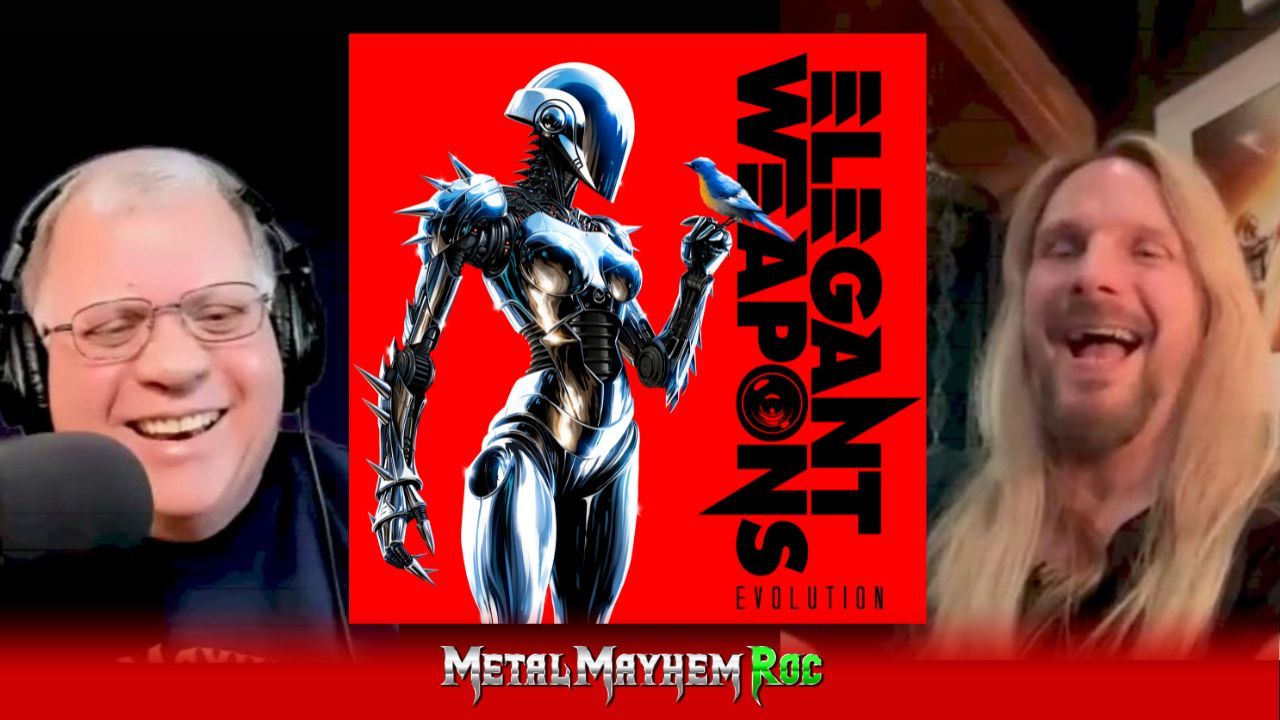
Richie Faulkner isn’t slowing down. Between continuing to push forward with Judas Priest and building something new with Elegant Weapons, he’s operating in two creative lanes at once—but both are fueled by the same thing: forward momentum.
On Metal Mayhem ROC, Faulkner breaks down the band’s second album, Evolution, and what it represents—not just musically, but structurally. This isn’t a side project anymore. It’s a band finding its identity in real time.
The Catalyst
The transition from Horns for a Halo to Evolution wasn’t just about writing new songs—it was about changing the entire process behind them.
The debut was shaped by lockdown-era limitations, with members recording separately across the globe. Evolution flips that approach. This time, the band built the record from the ground up with a more unified vision, starting with live-feeling drum takes and layering from there. The result is a tighter, more cohesive foundation.
Faulkner emphasizes that the title Evolution isn’t just thematic—it reflects real, tangible changes in how the album came together. From recording techniques to vocal production decisions, the goal was to elevate every element of the band’s sound.
The Creative Process
One of the most revealing parts of the conversation is how Faulkner approaches songwriting. There’s no single method. Some tracks come together in a single session, while others take years—sometimes over a decade—to find their place.
A riff that eventually became part of “Bridges Burn” sat unused for 15 years before finally locking into the right context. Other ideas, like the album’s ballad, were reworked multiple times—even briefly considered for a Priest session—before finding their home on Evolution.
This hybrid approach—part instinct, part long-term archive—allows the material to develop organically. Songs aren’t forced into existence. They emerge when the right combination of elements clicks.
Sound, Intent, or Message
What sets Evolution apart sonically is its willingness to expand beyond traditional expectations.
Faulkner openly embraces influences that might surprise some listeners, including early ’80s new wave and synth-driven music. Those textures make their way into the album in subtle but meaningful ways, adding depth without abandoning the band’s heavy foundation.
Tracks like “Come Back to Me” and “Keeper of the Keys” introduce keyboards and melodic layering that push Elegant Weapons into new territory. It’s not a departure—it’s an expansion.
At its core, the intent is clear: show a different side of the band while maintaining the power and identity that defined the debut. The inclusion of these elements reflects a broader musical palette, shaped by everything Faulkner absorbed growing up.
Touring / What’s Next
Live performance remains central to everything.
Faulkner makes it clear that Elegant Weapons is built to be experienced on stage. Touring isn’t optional—it’s essential. That’s where the songs fully come alive and where the connection with fans is established for the long term.
With commitments to Judas Priest taking priority through the summer, the plan is to bring Elegant Weapons on the road later in the year. The goal is simple: translate the energy of Evolution into a live setting and build momentum from there.
At the same time, Priest continues to move forward. The band has already begun laying the foundation for its next album, reinforcing a theme that runs throughout the interview—longevity driven by creativity, not nostalgia.
Why This Interview Matters
This conversation captures a moment of transition.
Elegant Weapons is no longer an idea or an extension of another project—it’s a functioning band with its own voice. Evolution represents that shift, both in how it was made and what it sounds like.
At the same time, Faulkner’s perspective offers insight into what it takes to sustain a career at the highest level of heavy music. Whether discussing songwriting, production, or the realities of touring, there’s a clear throughline: growth is intentional.
There’s also a personal dimension that adds weight to the conversation. Faulkner speaks candidly about his health and the adjustments required to keep performing, while still doing what he loves at a high level. It’s a reminder that longevity in music isn’t just about creativity—it’s about resilience.
Subscribe to Metal Mayhem ROC on YouTube
https://www.youtube.com/@MetalMayhemROC
Watch the Full Interview
GET SPECIAL MMROC SHOW UPDATES!
Become a part of a community of fellow metal heads who get updated on special episodes, interviews and and exclusive metal news.
We hate SPAM. We will never sell your information, for any reason.


