
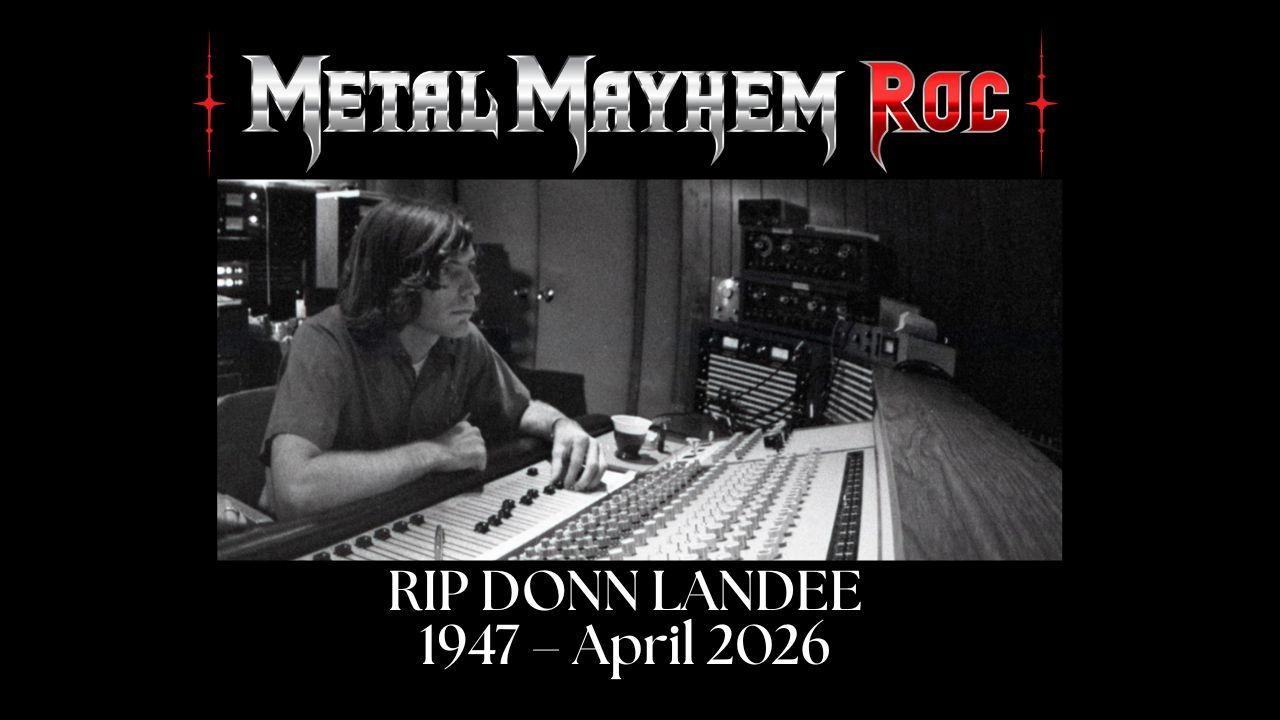
The music world has lost one of the key architects behind hard rock’s most recognizable sound. Longtime recording engineer Donn Landee, best known for his work with Van Halen, has passed away.
While rarely in the spotlight, Landee played a pivotal role in shaping the sonic identity that powered Van Halen’s rise from the Sunset Strip to global dominance.
Working closely with producer Ted Templeman, Landee helped capture the band’s raw, high-voltage energy in the studio—translating their explosive live sound into recordings that still feel immediate decades later. That balance between precision and power became a defining characteristic of Van Halen’s early catalog.
At the center of that sound was Eddie Van Halen, whose revolutionary approach to guitar required an engineer capable of both understanding and preserving its complexity. Landee leaned into Eddie’s tone rather than smoothing it out, allowing the now-legendary “brown sound” to sit front and center in the mix with clarity and force.
His work can be heard across a run of landmark albums, including Van Halen (1978), Van Halen II (1979), Women and Children First (1980), and Fair Warning (1981)—the latter often cited for its darker and more experimental sonic direction. Landee remained a key presence behind the board through 1984, helping the band expand its sound with the addition of synthesizers while maintaining its core identity, most notably on the chart-topping single “Jump.”
Beyond his credits, Landee’s philosophy in the studio was rooted in capturing performance over perfection. In later interviews, he described a preference for keeping setups simple and allowing musicians—particularly Eddie Van Halen—to explore tone and feel in real time, rather than overbuilding tracks through excessive overdubs or processing.
That approach helped preserve the spontaneity that defined Van Halen’s early recordings. Instead of polishing away imperfections, Landee leaned into them—understanding that the energy of the performance was often more important than technical precision.
He also emphasized the importance of mic placement, room sound, and signal path in achieving guitar tone, rather than relying heavily on post-production. That mindset played a critical role in documenting Eddie Van Halen’s sound in a way that felt immediate, aggressive, and alive.
Though his name may not have been widely known outside of studio circles, Donn Landee’s work is embedded in the DNA of Van Halen’s catalog—and in the sound of modern rock production itself.
Read: Donn Landee in His Own Words
In addition to his engineering legacy, Landee offered rare insight into his work and recording philosophy in a print interview conducted by Greg Renoff.
The conversation provides firsthand detail on working with Eddie Van Halen, capturing guitar tone, and the recording process behind some of the band’s most influential albums.
Read the full interview here:
https://tapeop.com/interviews/157/donn-landee
GET SPECIAL MMROC SHOW UPDATES!
Become a part of a community of fellow metal heads who get updated on special episodes, interviews and and exclusive metal news.
We hate SPAM. We will never sell your information, for any reason.


