
Metal Church Returns With Dead to Rights: Kurdt Vanderhoof on the Band’s Unexpected Revival
Apr 10, 2026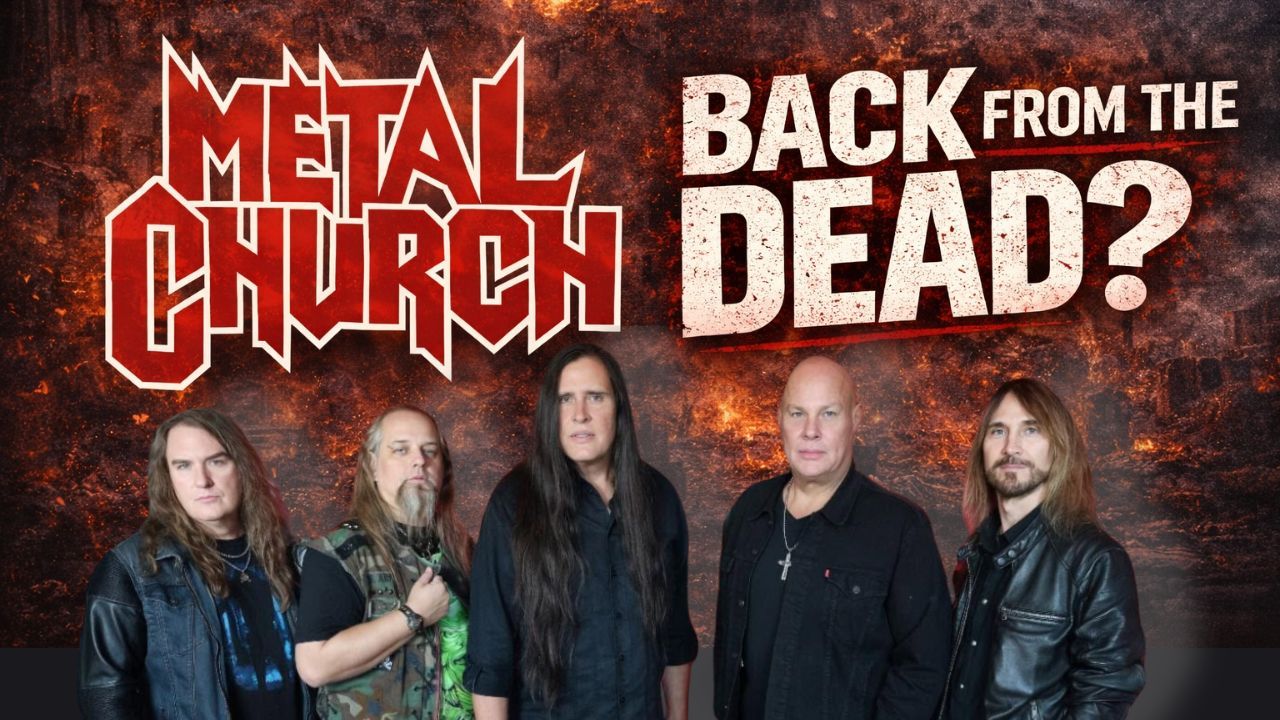
Metal Church was not supposed to be here.
After decades of recording, touring, and navigating the realities of a changing music industry, guitarist and founding force Kurdt Vanderhoof made a decisive call to shut the band down. What followed wasn’t a calculated comeback or a strategic relaunch—it was something far less predictable, and far more organic.
With Dead to Rights, Metal Church re-emerges not as a legacy act revisiting past glories, but as a band that rediscovered its purpose through circumstance, chemistry, and a renewed sense of creative direction.
The Catalyst
Vanderhoof is candid about where things stood prior to this new chapter. After touring in support of the previous record, internal tensions and general dissatisfaction led him to step away entirely. There was no announcement, no drawn-out farewell—just a quiet decision to move on.
For a time, that decision held. Vanderhoof shifted his focus to other musical projects and production work, content to leave Metal Church as a closed chapter. The idea of rebuilding the band, especially with yet another lineup shift, held little appeal.
What changed was not a plan, but a moment. When demo recordings featuring vocalist Brian Allen surfaced through the band’s label, Vanderhoof heard something familiar—something that echoed the spirit of the band’s earliest era without feeling forced. Around the same time, interest from players like David Ellefson and the return of drummer Ken Mary began to take shape.
None of it was orchestrated. But taken together, it became difficult to ignore.
The Creative Process
Once the lineup began to solidify, Vanderhoof approached the writing process with a familiar mindset: keep it organic, avoid overthinking, and let the music take shape naturally.
The material for Dead to Rights came together quickly once momentum built. Vanderhoof wrote and demoed a full batch of songs in a relatively short window, giving the band a strong foundation to work from. From there, the focus shifted to collaboration—not in terms of co-writing, but in allowing each player to interpret and shape their parts.
That approach is key to the album’s feel. While Vanderhoof handled the core compositions, the performances reflect the instincts of seasoned musicians working within a shared framework. The result is a record that feels cohesive without sounding rigid.
It also reflects a deliberate decision to think in terms of a complete album experience. Even in a streaming-driven environment, Vanderhoof remains committed to sequencing, flow, and the idea that a record should function as a unified piece rather than a collection of isolated tracks.
Sound, Intent, or Message
There’s an undeniable connection between Dead to Rights and the early Metal Church sound. Vanderhoof doesn’t frame it as a calculated return to form, but acknowledges that the presence of a vocalist influenced by the band’s original era naturally shaped the direction.
That influence extends beyond vocals. The album leans into classic heavy metal foundations, drawing from the same well that informed the band’s earliest work—bands like Black Sabbath and Deep Purple, where groove, dynamics, and variation play a central role.
Tracks like “Feet to the Fire” and “The Show” highlight that approach, blending traditional structures with shifts in tone and pacing. Elsewhere, songs like “No Memory” and the closing track “My Wrath” reinforce the album’s emphasis on flow and sequencing, building toward a finish that feels intentional rather than incidental.
At its core, Dead to Rights avoids the trap of being one-dimensional. It moves, it changes, and it reflects a band that values musicality as much as heaviness.
Touring / What’s Next
With the album now out, attention turns to the stage.
Metal Church enters this touring cycle with a unique challenge: balancing a deep catalog that spans decades with a new record that has already generated strong early response. Vanderhoof recognizes the expectations that come with a legacy act, but also sees an opportunity to integrate new material in a meaningful way.
Initial plans include a mix of North American dates and festival appearances alongside established names in the metal world. These settings provide not only exposure to large audiences, but also the chance for the band to reconnect with peers and contemporaries in a live environment.
Looking beyond the immediate tour cycle, the momentum has already extended into future writing. Discussions around new material are underway, signaling that this version of the band is not a one-off revival, but an ongoing creative entity.
Why This Interview Matters
This conversation offers a clear look at what separates a forced comeback from a genuine one.
There is no sense of obligation in Vanderhoof’s account—no attempt to justify revisiting the past. Instead, the story of Dead to Rights is rooted in timing, alignment, and the unexpected convergence of the right people at the right moment.
For listeners, that translates into a record that feels authentic to the band’s identity while still grounded in the present. For the broader metal landscape, it reinforces the idea that longevity is not just about persistence, but about knowing when—and how—to move forward.
Subscribe to Metal Mayhem ROC on YouTube
https://www.youtube.com/@metalmayhemroc
Watch the Full Interview:
GET SPECIAL MMROC SHOW UPDATES!
Become a part of a community of fellow metal heads who get updated on special episodes, interviews and and exclusive metal news.
We hate SPAM. We will never sell your information, for any reason.


