
More Than a Voice: Inside Layne Staley’s Journals in This Angry Pen of Mine (Book Review)
Mar 01, 2026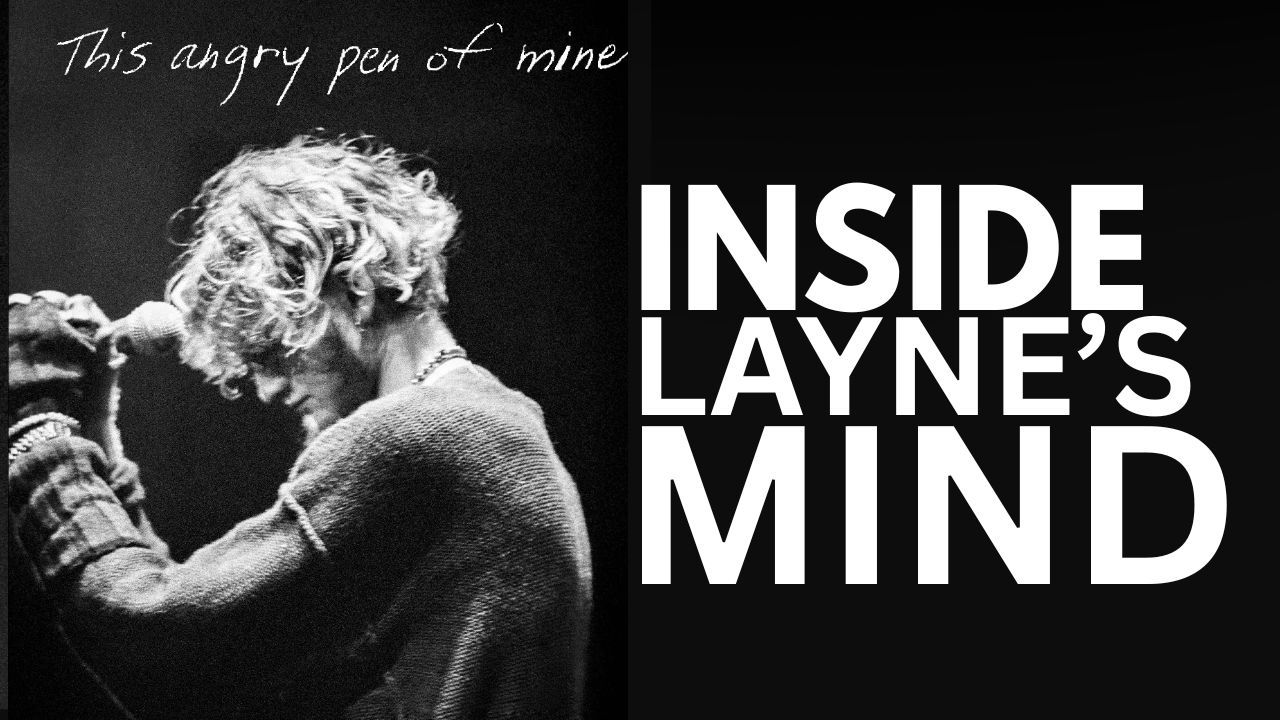
Published March 2026
What do Layne Staley’s private journals reveal about the man behind Alice in Chains? For decades, fans have connected with the emotional gravity of his voice — but This Angry Pen of Mine: Recovering the Journals of Layne Staley offers something far more intimate. This New York Times bestselling release presents Staley’s handwritten lyrics, personal reflections, artwork, and rare archival material, providing an unprecedented look into one of hard rock’s most haunting and influential figures.
Few voices in heavy music have carried the emotional weight of Layne Staley. As the frontman of Alice in Chains, his delivery was never performance for performance’s sake — it was exposure. His lyrics were lived experiences, and for many who grew up with this music, his voice wasn’t just part of the soundtrack of the ’90s; it was something we leaned on.
This Angry Pen of Mine is not a traditional biography, and that distinction matters. It does not revisit tour cycles, label politics, or chart success. Instead, it presents something far more personal: a preserved collection of Staley’s handwritten journals, lyric drafts, artwork, and deeply reflective writings. It reveals not the myth of the tortured rock star, but the human being wrestling in real time with identity, addiction, faith, and survival.
The book is divided into four sections, each adding dimension to that portrait.
Part One: The Writings
The opening section reproduces Layne Staley’s actual notebook pages — poems, fragmented thoughts, lyrics, and raw reflections. Seeing the handwriting changes everything. Some entries are controlled and deliberate; others are frantic and nearly illegible, as if the mind was moving faster than the pen. These are not polished memoir excerpts. They feel like survival documents.
Included are handwritten lyrics to “Nutshell,” “Sickman,” “Junkhead,” “I Stay Away,” “Godsmack,” and others, along with material from his time in Mad Season, including “I Don’t Know Anything.” Once you’ve seen these words in his handwriting, you won’t hear those songs the same way again. The distance between artist and listener narrows.
Not all of the writings are steeped in despair. Interspersed among darker entries are recovery passages written while he was actively trying to get clean. They carry cautious optimism. You can feel the effort. The tension between relapse and resolve runs throughout the book and complicates the oversimplified narrative that addiction was the only defining force in his life.
A recurring theme in the journals is identity fragmentation. His writings question faith, wrestle with redemption, and expose the exhausting cycle of addiction with sharp self-awareness. There is no glamorization here. There is clarity. And there is fatigue.
Part Two: The Vision
The second section shifts from words to imagery, showcasing Staley’s artwork, sketches, and self-portraits. One particularly striking image was later used for a rare 1995 concert poster during his time with Mad Season.
The artwork reinforces what the journals suggest: creativity wasn’t a side outlet. It was survival. Drawing, writing, singing — they were extensions of the same internal process.
Part Three: Legacy
The third section expands the narrative through reflections from friends and fellow musicians, including Robert Trujillo, Sully Erna, Corey Taylor, and Dave Mustaine.
One story stands out. Rather than filling guest lists with industry insiders, Staley would sometimes step outside sold-out venues searching for fans who couldn’t afford tickets and quietly put them on the list. That detail dismantles the caricature of the aloof rock icon. His empathy often outweighed his fame.
Nancy McCallum emphasizes that addiction was part of his story, but not the entirety of it. The darkness was real, but so were the humor, generosity, and compassion.
There is added significance in knowing that many of Staley’s journals were stolen after his death and later recovered. These writings nearly disappeared. Their preservation feels less like publication and more like restoration.
Part Four: The Future
The final section details the work of the Layne Staley Memorial Fund, supporting therapeutic health services for individuals struggling with addiction and mental health challenges. From treatment programs to mobile outreach, the fund extends his legacy into tangible help.
From a reviewer’s standpoint, This Angry Pen of Mine is not an easy read. It is not meant to be. It does not offer tidy redemption arcs or career celebration. What it offers is context — and context deepens everything.
Layne Staley was more than the voice behind “Nutshell” or “Down in a Hole.” He was a writer searching for clarity. An artist confronting himself. A man capable of extraordinary empathy.
For fans of Layne Staley, Alice in Chains, and anyone who has ever found solace in hard rock music, this book is difficult — but essential.
Join the Conversation
Layne Staley’s voice may have defined a generation, but This Angry Pen of Mine reminds us the voice was only part of the story.
If you’ve read the book, what stayed with you most? Did seeing the handwritten lyrics change how you hear those songs today?
Share your thoughts in the comments. Heavy music has always been more than sound — it’s connection. Let’s talk about it.
Purchase Information
This Angry Pen of Mine: Recovering the Journals of Layne Staley is available now wherever books are sold.
Purchase directly from the publisher here:
https://insighteditions.com/products/this-angry-pen-of-mine
Official Press Release
Metal Mayhem ROC received a review copy of this book from Atom Splitter PR.
The following is the official press release issued on November 21, 2025, announcing This Angry Pen of Mine: Recovering the Journals of Layne Staley, which debuted as a New York Times Nonfiction Bestseller in its first week.
FOR IMMEDIATE RELEASE — November 21, 2025
THIS ANGRY PEN OF MINE: RECOVERING THE JOURNALS OF LAYNE STALEY
Published by Weldon Owen & Primary Wave Music
Named Week One New York Times Nonfiction Bestseller
By Layne Staley
On sale now
This Angry Pen of Mine: Recovering the Journals of Layne Staley — an unprecedented look into the creative archive of Alice in Chains vocalist Layne Staley, created in direct collaboration with his family — has debuted as a New York Times Nonfiction Bestseller in its first week.
Published November 11, 2025 by Weldon Owen in partnership with Primary Wave Music, the book offers the first-ever look into the untold creative world of Layne Staley. This collection showcases his handwritten lyrics, deeply personal poetry, original artwork, rare photos, and fan tributes.
“I hope this book gives you a glimpse of the son I knew, the one beyond the headlines, the one with a beautiful, creative, happy soul,” Nancy McCallum writes in the foreword.
“Layne’s songwriting has left an unmistakable imprint on the music world, and its significance only grows with time. We’re honored to showcase his talents as a writer and to help ensure his legacy continues to shine,” says James Janocha, Primary Wave Music.
Through Layne’s scribblings and heartfelt musings, readers gain a window into the emotional depths of a man who gave so much of himself to his art and his fans, even as he struggled with his own battles.
Proceeds from sales benefit the Layne Staley Memorial Fund, a charitable fund dedicated to providing hope, education, support, and treatment funds for heroin addiction recovery.
Book Details
This Angry Pen of Mine: Recovering the Journals of Layne Staley
Publication Date: November 11, 2025
Publisher: Weldon Owen (in partnership with Primary Wave Music)
ISBN: 9798886743203
Length: 176 pages
Price: $40.00 USD
Review by Metal Walt
Metal Mayhem ROC
GET SPECIAL MMROC SHOW UPDATES!
Become a part of a community of fellow metal heads who get updated on special episodes, interviews and and exclusive metal news.
We hate SPAM. We will never sell your information, for any reason.


